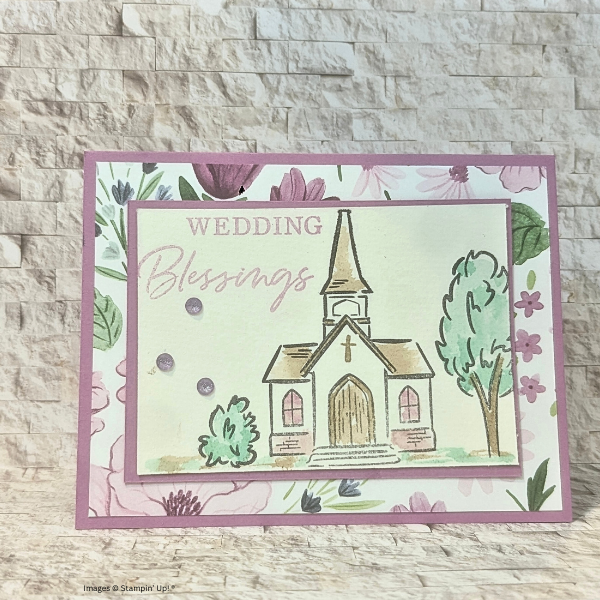
SO Which Is Better? That’s the question we explored during this week’s live cardmaking session. We will compare watercolor paper vs cardstock for stamping and watercolor techniques. Last week we created a beautiful floral card using Basic White cardstock, but this week I recreated the same design with one key change—switching the stamped panel to watercolor paper.
Sometimes the simplest changes can completely transform how a project looks and feels. Paper type is one of those things that many stampers overlook. Yet, it can make a huge difference when you begin adding water and blending inks.
For this card, I used the Blessed Beginnings stamp set again but made several creative changes. This is to give the project a fresh look. Instead of the original vertical layout, this version of the card is horizontal. By making this change it creates a wider space for the floral image and the sentiment.
The color palette was also updated to soft, elegant tones that work beautifully for a wedding card. The inks used were Shy Shamrock, Crumb Cake, Bubble Bath, and Fresh Freesia. These colors blend softly together and create a light, romantic feel that pairs perfectly with the wedding sentiment from the stamp set.
The biggest change, however, was swapping the stamped mat from Basic White cardstock to watercolor paper.
So… which is better?
Watercolor paper is designed to handle moisture much better than standard cardstock. When you add water or blend inks on the surface, the fibers allow the color to move and blend more smoothly. Instead of soaking in quickly, the ink stays workable a little longer, giving you more time to soften edges and create gentle transitions between colors.
On the other hand, Basic White cardstock absorbs ink more quickly, which can produce brighter and more defined stamped images. This is great when you want crisp details, but it doesn’t always allow for the same soft blending effect when watercoloring.
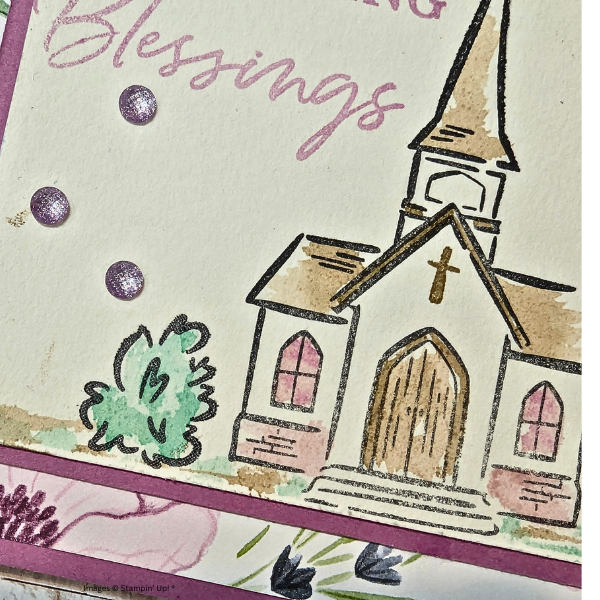
Using watercolor paper for the focal panel allowed the inks to blend more naturally, creating a softer and slightly more artistic look to the flowers. The subtle texture of the paper also adds interest and dimension to the finished card.
The answer really depends on the effect you want. If you love soft blends and watercolor-style images, watercolor paper is a fantastic option. If you prefer clean, crisp stamping, Basic White cardstock may be the better choice.
Either way, experimenting with different surfaces is one of the best ways to expand your stamping skills and discover new creative possibilities.
And sometimes the smallest change—like switching your paper—can completely elevate your cardmaking.
Until we meet again. . .


Leave a Reply